Jamaica & Dominican Republic
11 feb - 6th march 2018

- Pre-departure planning
- Itinerary
- Jamaica
- Blue Mountains
- Ecclesdown Road
- Goblin Hill
- Green Castle Estate
- Rockland Bird Sanctuary
- Dominican Republic (DR)
- Caño Hondo
- Rabo de Gato
- La Placa
- Zapoten
- Cachote
- Alcoa Road
- Cabo Rojo
- Las Salinas de Bani
- Cumayasa River canyon
- Del Este NP.
- Triplist of George Wagner
You can download a Garmin GPS file of most waypoints and tracks here
- Garmin GPS file
For some time I wanted to visit these Islands in the Caribbean. Jamaica because of the Streamertails and Dominican Republic (DR) for the Trogon, the monotypic Palmchat and both Islands for the Todies.
The annoying fact that there are no direct flights between J and DR has put me off going there in earlier years.
I would have liked to include Puerto Rico. Unfortunately Hurricane Maria devastated that Island a few months earlier. We decided that we could combine J and DR with the northern Lesser Antilles.
When we booked our return ticket it looked like this could work but it would be complicated and expensive.
After we had booked our return we looked into details it seemed that cooperation of Intercaribbean Airlines with another local Airline
seemed to have ceased to exist so unless we lose a few days extra and spend a lot more and fly via Trinidad.
This did not seem appealing so we thought we might try locally to get from DR to the Lesser Antilles.
We planned a week for J, a week for DR and a little over a week to visit St. Lucia and Dominica.
However even locally there was no cheap and fairly direct way to get from DR to the Lesser Antilles.
So in the end we abandoned the idea to visit the Lesser Antilles and spend a little too much time on DR.
In recent years there is a connection between the two islands flying via Turcs and Caicos Islands.
The return to J from DR is almost as expensive as flying directly from Europe.
And getting from the Greater Antilles to the so nearby Lesser is still more expensive and time consuming than visiting them on separate trips.
We were successful in seeing the endemics and near endemics and we enjoyed our trip.
Contact information is marked red
Links are in blue.
Pre-departure Planning
There is no need to get visas except the ESTA permit to travel through the US.
When you fly in at DR like we did, keep your receipt for your Visa on arrival for your next return after Jamaica. It will allow you to enter again without cost.
For both Islands it seems necessary to rent a car. We arranged this before with AVIS. Both Islands do not require a 4WD although a high clearance makes things easier. On DR, the Zapoten track and Cachote road do require a 4WD but these can be arranged locally by Kate Wallace:
Kate Wallace
katetody@gmail.com
www.Tody Tours.com
Jose Gabriel Garcia 105
Zona Colonial
Santo Domingo
Dominican republic
From US one can call these directly. From elsewhere add +1:
809-686-0882
cell phone 829-205-0882
camp manager is 809-350-2778.
Kate is good company, she knows her birds and knows exactly what birdwatchers want.
Her place is also most conveniently located and with a very nice setting to relax during the heat of the mid-afternoon to still enjoy a bit of the local nature.
The Cabins are basic but have a nice touch. The food is good. The place is not at all over priced and comes highly recommended.
We pre-booked most of our other accommodation through the Internet.
We noticed some attention to occurrence of malaria on DR when we flew to Jamaica but it seems the risk in the dry season is low so we did not take any antimalarials.
I would advise to install a free offline navigational app on your phone that uses “open streetmap” as a source to use as a navigational device while travelling on these islands.
I personally always use Mapfactor which has a few minor bugs but hardly ever fails and has excellent maps worldwide with all the minor roads that include all the birding sites.
Find the places as indicated in this report and enter them before travelling. This will make your trip easy.
The best alternative for the open streetmap source is Google but one needs to install the maps separately to make sure you can use it offline.
Entering waypoints in the middle of nowhere is a problem with Google. So I would not travel without a (free) navigational app that uses “open streetmap”.
The few bugs that Mapfactor has is that it sometimes does not accept the selected waypoint as a next destination the first time and one has to set it as a destination a second time.
Also it rarely but sometimes does not give you the best route so check the route before driving.
So find for instance the site for the Jamaican Crow at Ecclesdown road by recognising the bends in the road and then just tap on the site and enter it in your phone, naming it in a way that you would know what to select when on route. Then when you are there just tell your app to navigate to the site. So the few not so obvious turns to get to the entrance of this road will be a formality. For many trips now this has never failed me and it will never have you searching for the right way.
The phone system on these Islands is using the American country code +1. Having prearranged most of the necessities we found it not necessary to buy a local simcard. If you think you will need one, the local phone company in DR is CLARO.
We took a small library of sounds from Xeno Canto as usual:
http://www.xeno-canto.org./explore
Some sounds that we missed on this excellent site were recorded and added by George Wagner.
The sounds that were recorded during this trip are linked in this report.
Itinerary
Since we had more than enough time on DR this isn't your ideal Itinerary if you have little time.
We spent more than the required time at Rabo de Gato which is not a special area at all but conveniently in the backyard of Villa Barancoli allowing for some pictures of the Anolis Lizards and common birds.
Sun 11-Feb 18 spend night in Santo Domingo
Mon 12-Feb 18 fly to Kingston
Tue 13-Feb 18 Blue Mountains
Wed 14-Feb 18 Blue Mountains
Thu 15-Feb 18 Blue Mountains - San Antonio –
Ecclesdown Rd.
Fri 16-Feb 18 Ecclesdown Rd.
Sat 17-Feb 18 Goblin Hill – Green Castle Estate –
Montego Bay
Sun 18-Feb 18 Rockland Bird Observatory - Kingston
Mon 19-Feb 18 Blue Mountains
Tue 20-Feb 18 fly to Santo Domingo – drive to Caño
Hondo
Wed 21-Feb 18 Caño Hondo – drive to Puerto Escondido
Thu 22-Feb 18 Rabo de Gato
Fri 23-Feb 18 Zapoten
Sat 24-Feb 18 La Placa – Rabo de Gato
Sun 25-Feb 18 Rabo de Gato
Mon 26-Feb 18 Rabo de Gato
Tue 27-Feb 18 Rabo de Gato – Cachote rd.
Wed 28-Feb 18 Cachote – Cabo Rojo - Pedernales
Thu 01-Mar 18 Alcoa Road
Fri 02-Mar 18 Cabo Rojo – Las Salinas de Bani
Sat 03-Mar 18 Cumayasa – Punta Cana area
Sun 04-Mar 18 Del Este reserve – Punta Cana
Mon 05-Mar 18 Snorkelling Bayahibe – Isla Saona
Tue 06-Mar 18 Bayahibe – Santo Domingp - fly home
Jamaica

We flew to Kingston from Santa Domingo via Providenciales (Turks and Caicos Islands) with Intercaribbean Airways.
The return was expensive (455 euro) but at least it was not a return via dreadful Miami (time consuming and full of hassle as every US city) or Panama City as used to be the problem in the past.
Compared to the next door Dominican Republic (DR) this is the more expensive but seemingly less developed of the larger Antilles were the roads are full of potholes.
It was reputed to be also the least safe. International news reached even the Dutch headlines about robberies in the Montego Bay area were gangs had taken over the control of the area.
When we were there, the state of emergency was declared for the Montego Bay area, with police checkpoints entering the area (and probably a negative travelling advice).
We arrived in the night for a one night stay and had to search for our budget accommodation.
Locals sometimes manage to create language barriers with their pidgin English full of slang but mostly we were fine communicating in English. We had no unfriendly encounters but found some places surprisingly less well adapted for tourism.
Carhire
Car rental is almost twice as expensive as in neighboring DR.
We used AVIS and rented a Toyota … with normal clearance which slowed us down in the pothole abundant countryside.
Blue Mountains
This site is needed in your itinerary mainly because of Blue Mountain Vireo, Rufous throated Solitare, and probably Crested Quail-dove and Greater Antillean (Jamaican) Elaenia. It also offers good chances for the Jamaican Owl.
We pre-booked our accommodation via Air Bnb: Pear Tree Cottage. Although our helpful host when we where there: Regine, most likely will have moved to another place. The accomodation might still be available:
https://www.airbnb.nl/rooms/14255114
It was a nice place with beautiful setting in the forest. The only drawbacks were that there was no place to eat nearby (unless ordered in advance) and the short path of the turnoff from the main road was very rough making you scraping the bottom of your normal clearance car.
The Irish town nearby is supposed to have a place to eat if ordered in advance. Further up there is another tiny community that usually is crowded with tourists that has some food if they have not run out.
Getting there at dinner time can be a problem as they may be closed. If possible one should book a meal ahead. We always went up too early to pass by on the way up and book ahead but were lucky a few times trying to get a meal around 5 pm. The Gap café is closed most of the time at this time of the year and gets few visitors.

Because of the numerous potholes, despite the short distance it takes a relatively long drive (close to an hour) from the nearest accommodation to get to the best stretch of road to get the birds. This is at the Woodside track and along the road from there to the Gap. Unless you intend to camp at the Holywell Park. The latter needs to be booked at an office in Kingston and could not be booked online.
The only bird that we did not find in the mentioned area is the Jamaican Blackbird. We found a few birds before the Woodside track where there is a rock/cliff overhanging the road.
The Blackbird is actually more easy at Ecclesdown road.
The best place for Crested Quail-dove is the first stretch of the Woodside track in the early morning.
The track is frequently used by the locals to make their way into the coffee plantation a little further down. Sometimes it can be seen in the late afternoon as well.
Prolonged views of the Yellow Shouldered Grassquit we had only in the coffee plantation in the lower section but others also saw it at the first small clearing on your left after the first 150 yards going down this track.
Birds seen (mostly at Woodside Track and along road to the Gap):
Magnificent Frigatebird, Cattle Egret, Turkey Vulture, Red-tailed Hawk, White-crowned Pigeon, Common Ground-Dove, Ring-tailed Pigeon, Crested Quail-Dove, Zenaida Dove,
Chestnut-bellied Cuckoo, Jamaican Lizard-Cuckoo, White-collared Swift, Vervain Hummingbird, Red-billed Streamertail, Jamaican Tody, Jamaican Woodpecker, Greater Antillean Elaenia,
Jamaican Pewee, Sad Flycatcher, Loggerhead Kingbird, Jamaican Becard, Blue Mountain Vireo, Jamaican Vireo, Rufous-throated Solitaire, White-eyed Thrush, White-chinned Thrush,
Black-and-white Warbler, Common Yellowthroat*, Arrowhead Warbler, American Redstart, Black-throated Blue Warbler, Prairie Warbler, Bananaquit, Yellow-faced Grassquit, Black-faced Grassquit,
Orangequit, Greater Antillean Bullfinch, Yellow-shouldered Grassquit, Jamaican Spindalis, Indigo Bunting*, Jamaican Oriole, Jamaican Blackbird, Greater Antillean Grackle, Jamaican Euphonia.
Continuing the road through the Blue Mountains to the north coast takes some time because of the bad condition of the road. After the pass near the Gap the other side of the pass usually is foggy which is another reason to concentrate on the southern stretch to get your birds.
There are however a few short stretches where the forest looks in better shape and this is where one has chances to see the Crested Quail-dove near the road. Local people refer to this bird as the “Mountain Witch”.
Ecclesdown Road
This is besides the Blue Mountains the main birding area to get most of the endemics.
It is the best place to see both Parrot-species, Jamaican Blackbird, Jamaican Crow and the best birding site of the whole island.
The road is very quiet and offers relaxed birding with good views. Both sides of the road are thrashed recently.
This makes the forest look in deplorable state but makes birding easier. Especially for the Parrots and the Crow.
We accommodated ourselves in the budget backpacker hostel: Irie Vibes in Port Antonio, which had again a near 4WD stretch of road to park the car near the hostel.
https://goo.gl/maps/daRz6VHK7jH2
We parked the car near the first lookout for Parrots and walked until the site for the Crow:
https://goo.gl/maps/mvkx3oc1LJ32
which is right at the point where the road goes off this map:

Birds seen:
Turkey Vulture, White-crowned Pigeon, Ring-tailed Pigeon, Common Ground-Dove, Ruddy Quail-Dove, White-winged Dove, Zenaida Dove, Chestnut-bellied Cuckoo,
Jamaican Lizard-Cuckoo, Black-billed Streamertail, Jamaican Tody, Jamaican Woodpecker, Black-billed Parrot, Yellow-billed Parrot, Olive-throated Parakeet,
Jamaican Pewee, Sad Flycatcher, Rufous-tailed Flycatcher, Loggerhead Kingbird, Jamaican Becard, Jamaican Vireo, Jamaican Crow, White-chinned Thrush,
Black-and-white Warbler, Arrowhead Warbler, American Redstart, Cape May Warbler, Northern Parula, Black-throated Blue Warbler, Prairie Warbler, Bananaquit,
Orangequit, Greater Antillean Bullfinch, Jamaican Spindalis, Jamaican Oriole, Jamaican Blackbird, Green rumped Parrotlet.
Goblin Hill
This site:
https://goo.gl/maps/5cSAEV7DYMw
Was picked for Jamaican Mango and Jamaican Owl. It is a nice area with large trees and has a primary forest look. The Mango was surprisingly seen at introduced Ginger flowers at sides of the entrance road of the top range Goblin Hill Villa place. Very nearby we also saw the only Jamaican Owl in the dark just before dawn. The Owl has a rather soft call so one needs to be fairly close to hear it. The bird we encountered sat still in a tree while calling and did not fly off when spotlighted.
Birds seen:
White-crowned Pigeon, Common Ground-Dove, Jamaican Owl (1), Jamaican Mango (1), Black-billed Streamertail, White-chinned Thrush, Northern Mockingbird, American Redstart, Black-throated Blue Warbler, Jamaican Spindalis, Greater Antillean Grackle.
Green Castle Estate
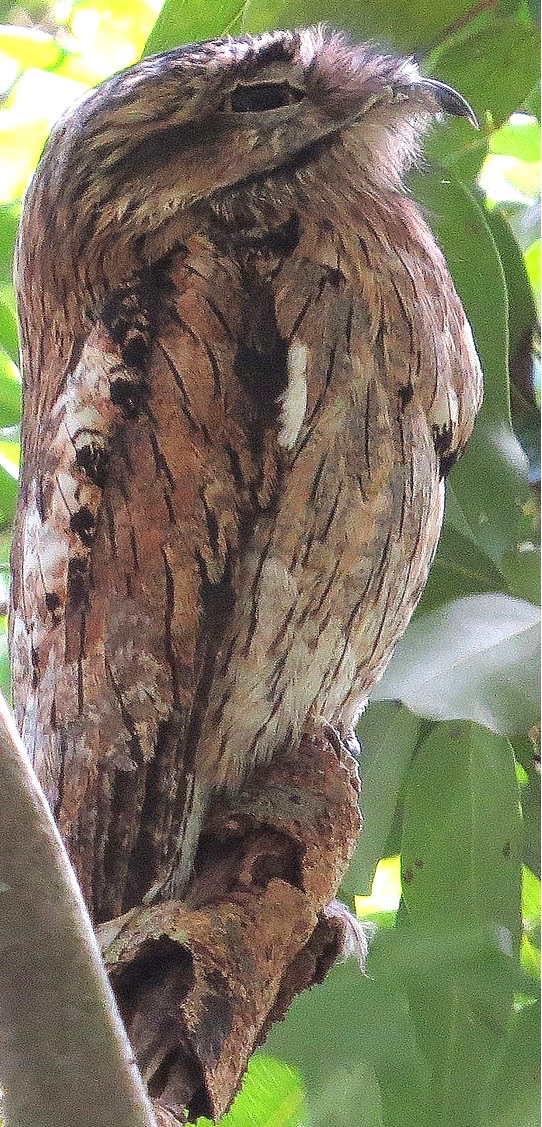
This is not a prime birding site anymore as most birds are best seen elsewhere. But we visited anyway because we were on the way to Montego Bay area and wanted a second chance for the Potoo and had still not seen Yellow Shouldered Grassquit, Jamaican Elaenia, Caribbean Dove and Northern Potoo. We missed the first two. But others saw the Grassquit the same day. Also we did not see the Elaenia which made us make our way to Montego Bay area since we had not seen or heard it in the Blue Mountains or Ecclesdown Rd. Paying … US allows one to bird the area and have a nice lunch at the veranda where Jamaican Mango’s and Vervain Hummingbirds were visiting flowers and feeders.
The Potoo is a certainty here as it visits the area around the compound from 7 pm onwards.

Anolis garmani
Birds seen:
Red-tailed Hawk, Ruddy Quail-Dove, Caribbean Dove, Zenaida Dove, Smooth-billed Ani, Northern Potoo, Jamaican Mango, Vervain Hummingbird, Red-billed Streamertail,
Jamaican Tody, American Kestrel, Olive-throated Parakeet, Sad Flycatcher, Rufous-tailed Flycatcher, Loggerhead Kingbird, Jamaican Vireo,
White-chinned Thrush, Black-and-white Warbler, American Redstart, Bananaquit, Yellow-faced Grassquit, Jamaican Spindalis.
Rockland Bird Sanctuary
Our goal was to see the Yellow Shouldered Grassquit and the Jamaican Elaenia that eluded us at the other sites.
We found a guide near the garden of the sanctuary who was willing to take us and knew his birds. He took us on a path behind the compound through some secondary forest.
It took us some time to find our birds. The Grassquit just gave me just a brief but good view before it flew off not to be found again so we revisited the Woodside track after this.
The Potoo was still around near the Sweet Rock area.
Birds seen:
Turkey Vulture, Common Ground-Dove, Caribbean Dove (1), Northern Potoo (1), Red-billed Streamertail, Jamaican Tody, American Kestrel, Jamaican Elaenia (2), Sad Flycatcher,
Loggerhead Kingbird, Jamaican Vireo, White-chinned Thrush, Ovenbird, Black-and-white Warbler, Black-throated Blue Warbler, Bananaquit, Yellow-faced Grassquit,
Black-faced Grassquit, Orangequit, Jamaican Oriole, Jamaican Euphonia.
Dominican Republic (DR)
DR is the most comfortable of the three greater Antilles. Cuba (which I visited some years ago) is poor and a little complicated but cheap.
Jamaica is expensive and poor and after these two I found DR to be well developed and catering well for tourism.
It has a relatively good infrastructure and it is even making great steps towards the new energy transition.
We saw a huge modern windmill park operational along the coast, which I considered a nice surprise. A great example for countries that depend on tourists that like to stay at the beach.
We chose DR as our island to arrive and leave.
This was partly due to our chances to find a local possibility to get to the Lesser Antilles which we failed to achieve.
Return flights to DR from Europe are cheap but so are some returns for Jamaica (maybe especially when flying from UK or US). I paid 607 euro for a return to Santo Domingo.
Despite the fairly good infrastructure there are two roads that one needs to travel on to see all endemics which need a 4WD vehicle: the road to Zapoten and the road to Cachote.
These roads are actually more like stream-beds of mountain streams, heavily eroded in the seemingly random way so impossible to negotiate the same way all the way.
One needs to cross the dry stream very frequently which acquires the highest possible clearance to slowly travel these roads/stream-beds.
Even a Toyota Hilux will scrape the bottom a few times when one is as cautious as one can be.
To arrange this kind of transport ahead for your trip has produced some problems with other birders as most car rental agents do not have these available even if they claim they do.
To avoid an unpleasant start of your trip and an uncertainty of getting the right vehicle on arrival (despite it being booked) and to avoid spending all your time in an expensive 4WD you may opt like we did to hire a normal car and let the 2 roads being taken care of by locals via Kate Wallace.
Both roads need at least a full day to visit because of the slow driving.
I would say unless you have less than a week the best thing to do is to get yourself a normal rental car and get to Kate Wallaces place contacting her about your plans ahead.
A week would seem a fairly short to see all the endemics and specialities but some people have managed this in the past.
When we flew in from Kingston and wanted to pick up our car we had a slight problem with AVIS when they did not accept a credit card for the insurance if it had no ….. trying to force us to buy their insurance which was a lot more expensive. After some hassle the small office near the car park accepted the credit card insurance. We made our way towards Caño Hondo were we arrived after dark.
Santo Domingo
We walked though colonial district east towards Colonial Tours where we tried to arrange a visit to the Lesser Antilles in which we did not succeed.
Birds seen:
Yellow Faced Grassquit, Hispaniolan Parakeet, White-winged Dove, Hispaniolan Woodpecker, Palmchat, Black-crowned Palm-tanager.
At the Airport we saw:
Magnificent Fregatebird, Turkey Vulture, Caribbean Martin, Antillean Palmswift.
We first visited Jamaica and after our return picked up our car and drove to:
Caño Hondo
We had Alto de Caño Hondo pre-booked, although a bit pricey it is excellent quality accommodation well situated.
Kate Wallace had phoned ahead to ask for our guide:
Juan Cespedes: +18098637946.
Juan wanted us to pay a 100 U$ for the evening to see the Ashy Faced Owl and another 150 U$ for the next morning to see the Ridgways Hawk.
We thought that too high a fee for these short guiding missions. After some bargaining he settled for 150 U$ for both visits together.
It took us quite some time to get a view of the Owl and one does seem to need a guide to get to the place where the territories are.
The Owls seemed at first not to respond on calls from our guide and also from tape. When we spend an hour in an area with 4 pairs,
our guide gestured we should try a different area but one final tape use when we passed the first site near our car park made the Owl finally to appear in a palmtree.
The next morning we walked on a track behind our accommodation Alto de Caño Hondo. After a walk of half an hour we came to an old nest of the Ridgway's Hawk.
According to our guide the birds stay year round near their nesting place.
Playing the tape resulted in the pair flying in and calling repeatedly staying close to the nest. We left the place soon to leave these rare birds in peace.
Birds seen:
Cattle Egret, Turkey Vulture, Ridgway's Hawk (2), Common Ground-Dove, Mangrove Cuckoo, Ashy-faced Owl (1 seen, several heard), Antillean Mango, Vervain Hummingbird,
Antillean Piculet, Hispaniolan Woodpecker, American Kestrel, Stolid Flycatcher, Gray Kingbird, Black-whiskered Vireo, White-necked Crow, Palmchat, Greater Antillean Grackle.

Rabo de Gato
This is the trail just behind Villa Barrancoli, residence of Kate Wallace’s nicely situated near Puerto Escondido. Barrancoli is the local name of the Tody.
Villa Barancoli is the place to stay because of the pleasant surroundings and well situated to start your tracks up to the Zapoten area, La Placa and is suitable to see the common birds of DR.
Kate managed to set up a very nice place that is perfectly suitable for birders. She knows to arrange just about anything you need to see all your birds.
She also a nice booklet of many birding sites in the DR in case you find yourself with plenty of time like we did because our extension to the Lesser Antilles fell through.
The stretch of acacia woodland in between the avocado plantation and the reserve is good for Hispaniolan Nightjar but we found it impossible to see the birds here. Least Pauraque is also present here. We founds both of these nightjars were more easily seen near Rabo de Gato. The Least Pauraque was easiest on the grounds of Villa Barrancoli.
Birds seen:
Helmeted Guineafowl, Pied-billed Grebe, Cattle Egret, Green Heron, Yellow-crowned Night-Heron, Common Gallinule, Limpkin, Scaly-naped Pigeon, White-crowned Pigeon,
Common Ground-Dove, Plain Pigeon, White-fronted Quail-Dove, Key West Quail-Dove, Zenaida Dove, Mourning Dove, Smooth-billed Ani, Hispaniolan Lizard-Cuckoo,
Least Pauraque, Greater Antillean (Hispaniolan) Nightjar,
Antillean Palm-Swift, Antillean Mango, Vervain Hummingbird, Hispaniolan Emerald, Broad-billed Tody, Antillean Piculet, Hispaniolan Woodpecker, American Kestrel, Hispaniolan Parrot,
Hispaniolan Parakeet, Hispaniolan Pewee, Stolid Flycatcher, Gray Kingbird, Flat-billed Vireo, White-necked Crow, Northern Mockingbird, Palmchat, Ovenbird, Louisiana Waterthrush,
Black-and-white Warbler, American Redstart, Cape May Warbler, Northern Parula, Black-throated Blue Warbler, Palm Warbler, Yellow-throated Warbler, Prairie Warbler, Bananaquit,
Yellow-faced Grassquit, Black-faced Grassquit, Black-crowned Palm-Tanager, Hispaniolan Spindalis, Hispaniolan Oriole, Antillean Siskin, House Sparrow.
Others: Anolis distichus, Anolis cybotes, Tail-less Scorpionspider.
La Placa
A couple of kilometers towards the reserve at the entrance with a gate there is a small sanctuary that is named after a sign that has been put up: La Placa.
This place seemed good to find the Bay-breasted Cuckoo and Flat-billed vireo. The gate that is mainly there because of possibly unwanted Haitians that could cross the border further on.
The gate will be opened for you even very early in the morning in the dark. After the gate one can enter the small cattle gate to the house on the right and walk around the house.
The trail starts behind the house next to a water tank. Trails are clear and obvious with signs and maps. As soon as you are on the trail you are in Bay-breasted Cuckoo and Flat-billed vireo country.

Birds seen:
Scaly-naped Pigeon, White-fronted Quail-Dove, Bay-breasted Cuckoo, Hispaniolan Lizard-Cuckoo, Burrowing Owl, Broad-billed Tody, Hispaniolan Woodpecker,
Hispaniolan Parakeet, Hispaniolan Pewee, Stolid Flycatcher, Flat-billed Vireo, Ovenbird, Black-and-white Warbler, American Redstart, Black-throated Blue Warbler,
Yellow-faced Grassquit, Black-crowned Palm-Tanager, Least Pauraque*, Green-tailed Warbler, Pine Siskin.
The last three species were actually seen in the Acacia woodland between the avocado plantations and La Placa.
A huge Tarantula was seen on the road one evening after dark.
Zapoten

To get to Zapoten it is best to get this arranged by Kate.
The Zapoten track is dealt with by a local high clearance 4WD vehicle and local guide for a full day and one needs to start at 4 am in the morning to get at Zapoten before sunrise
for your best chances to see the La Selle’s Thrush and Bicknells Thrush. Just before Zapoten there is an area with pine trees that has the Hispaniolan Nightjar but again the birds
did not respond by coming within view. The pine forest behind the Zapoten compound gave us nice views of the endemic Crossbill.
Birds seen:
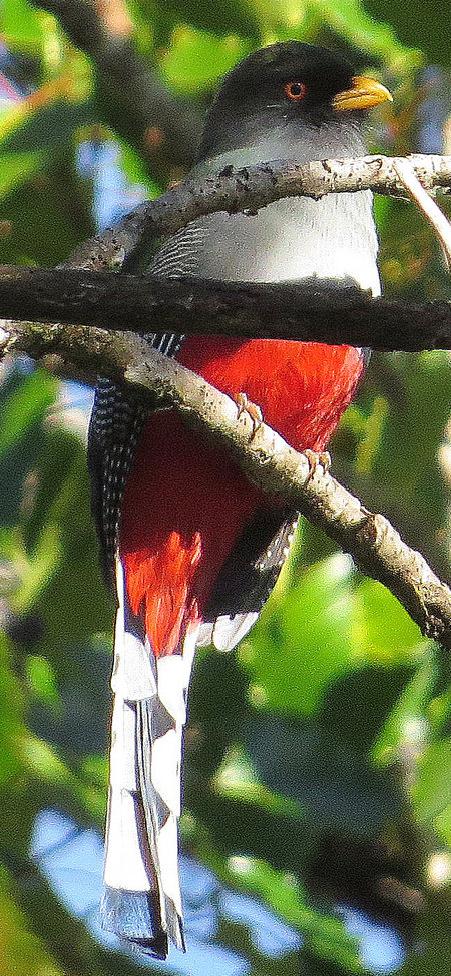
White-fronted Quail-Dove, Mourning Dove, Burrowing Owl, Northern Potoo, Hispaniolan Emerald, Hispaniolan Trogon, Narrow-billed Tody, Hispaniolan Woodpecker,
American Kestrel, Greater Antillean Elaenia, Golden Swallow, Rufous-throated Solitaire, Bicknell's Thrush, La Selle Thrush, Red-legged Thrush, Pine Warbler,
Greater Antillean Bullfinch, Western Chat-Tanager, White-winged Warbler, Green-tailed Warbler, Antillean Euphonia, Hispaniolan Crossbill.
Cachote
At the Cachote road arrangements will be ready for you if Kate phones ahead.
In case you are not able to arrange things through Kate. The contact for the trip up to Cachote is:
Marie Sella, ph. +1809835301.
The other way to arrange a daytrip or overnight stay is the local Travel Agency: Ecotour Barahona:
the local Travel Agency: Ecotour
Barahona:
https://www.ecotourbarahona.com/

After meeting the vehicle at an appointed place in the village at the start of the track, you can leave your own vehicle near a petrol station and let yourself be driven up to the lodge at Cachote (see map) near to a local community who will have food ready for you to serve you.
The local people do an excellent job to cater for you and you can walk around by yourself.
The one bird to get here is the Eastern Chat-tanager which is rare and very difficult to get elsewhere.
It can be very skulky so it may take time to get it.
We tried night-birding in the area but this produced only one distant call of a Stygian Owl.
Birds seen:
Red-tailed Hawk, Hispaniolan Lizard-Cuckoo, Hispaniolan Emerald, Hispaniolan Trogon, Narrow-billed Tody, Hispaniolan Woodpecker, Greater Antillean Elaenia,
Rufous-throated Solitaire, Red-legged Thrush, American Redstart, Black-throated Blue Warbler, Bananaquit, Eastern Chat-Tanager, Black-crowned Palm-Tanager, Hispaniolan Spindalis.
Alcoa Road
It is best to get yourself situated in Pedernales which has a few places to stay in the budget range.
The road should be visited in early mornings as well as late night for the nightbirds.
This road that is in amazing condition steadily climbs from the coast up to altitudes where pine forest dominates the landscape.
It has very good birding and is the only place where Hispaniolan Palm-crow is more or less guaranteed.

Besides that it gives you the best chances for Golden Swallow, Hispaniolan Nightjar and Stygian Owl.
It is one of two places in DR where one should try for Hispaniolan Crossbill. The road is wide and has very little traffic.
While slowly climbing up for most of the way the road starts getting interesting and then starts to wind up to a higher level into the pines.
On the map one can see the dark area which holds the pine forest.

The winding part is best for the Hispaniolan Nightjar.
A little higher there is a roofed sign just a little off the road to the right:
N18.12115 W71.59761
Or:
https://goo.gl/maps/x7iiHFJrCMx
This is where a waterhole is situated and it is a good spot to spend some time a few times. The area seems quite dry and there is usually no water around for miles so this is a good place to see birds.
The crossbill comes to drink here too. This is the place were to our surprise we heard several Stygian Owls just after dusk.
I have linked the name of the Owl to a soundfile upload to xeno canto.
Birds Seen:
Plain Pigeon, Mourning Dove, Hispaniolan Lizard-Cuckoo, Burrowing Owl, Stygian Owl (1 seen, several heard),
Greater Antillean Nightjar, Hispaniolan Emerald, Merlin, Hispaniolan Parrot, Hispaniolan Parakeet, Hispaniolan Pewee, Stolid Flycatcher,
Palm Crow, Golden Swallow, Red-legged Thrush, American Redstart, Palm Warbler, Pine Warbler, Prairie Warbler, Black-crowned Palm-Tanager.
Other Sites:
Next section contains some sites that we visited because we had a few days to spare.
One site in particular can be of use because it potentially offers a first class spectacular avian highlight that is worldwide rare: Courting White-tailed Tropicbirds:
Cabo Rojo
Your open streetmap offline navigation will show this small side track off the main road that leads to some tourist sites further to the east.
N17.894750, W-71.664083
https://goo.gl/maps/2X324QJS5mn
So you can set your navigation to drive there straight but you would be wise to check the route since
the route closest to the coast (going past Playa Cabo Rojo) has been eroded by the seashore and is not drivable anymore. Instead take the next road parallel to this road. When the road bends left and straight south drive until it turns slightly to the east. There is a turnoff to the right, very close to this slight bend. It is more like a track. Google maps does not show this turnoff but your open streetmap navigation will show it. It is driveable but the thorny bushes on the side of the road may scratch your car, so you may opt to walk these last 300 m to the rocky cliffs.
The Tropic birds breed just around the corner of the large outcrop that is visible from a distance. When you will be early in the morning at beginning of March probably a few weeks later is better) you will see the courting of these amazing birds before the birds set out far beyond view to fish for all of the day. Cave Swallows also breed on these cliffs.
We tried this site also around sunset but did not see any Tropic birds. To see one in the middle of the day is hardly possible as all the birds would be far out at sea or breeding on the cliffs hidden from view. From other Tropic birds I knew that they return at the end of the day but our attempts to see them in the late afternoon close to sunset were fruitless.
The early morning did produce a few pairs of these perhaps most stunningly graceful of all birds.
We may have been a little late in the morning or a little early in the season for full courting as we saw fairly distant pairs simultaneously flying around a bit and hesitantly making some courting gestures.
Birds seen:
Helmeted Guineafowl, White-tailed Tropicbird (10), Magnificent Frigatebird, Brown Pelican, Great Egret, Snowy Egret, Little Blue Heron, Cattle Egret, Green Heron, Turkey Vulture,
Red-tailed Hawk, Black-necked Stilt, Semipalmated Plover, Royal Tern, Rock Pigeon, Eurasian Collared-Dove, Common Ground-Dove, Mourning Dove, Smooth-billed Ani, Antillean Mango,
American Kestrel, Gray Kingbird, Cave Swallow, Northern Mockingbird, Ovenbird, Black-and-white Warbler, American Redstart, Cape May Warbler, Northern Parula, Palm Warbler, Prairie Warbler,
Bananaquit, Yellow-faced Grassquit, Black-faced Grassquit, Greater Antillean Grackle.
Las Salinas de Bani
We chose this place driving from the South West towards Santo Domingo to see some estuarine birds and hopefully a Reddish Egret which was still missing on my life-list.
N18.212642, W-70.539741
N18.212642, W-70.539741
https://goo.gl/maps/JqNwEWZuTfr
The place was quite rich in birds and indeed soon after we arrived we saw two white phase Reddish Egrets.
Birds seen:
Magnificent Frigatebird, Great Egret, Little Blue Heron, Snowy Egret, Reddish Egret (2), Least Sandpiper, Semipalmated Sandpiper, Greater Yellowlegs, Lesser Yellowlegs,
Short-billed Dowitcher, Whimbrel, Antillean Palm-swift, Hispaniolan Oriole, Yellow Warbler, Royal Tern.
Cumayasa River canyon
This place holds the same birds as Rabo de Gato but it seems more bird rich than the place where you will probably leisurely do some birdwatching while staying at Kate's place.
Since it is a turn off on a dual carriage way, you will have to get on the coastal highway nr 3 in the direction towards Santo Domingo (Westwards).
In case you are Eastbound there is a crossover possible just after the bridge over the canyon and one should double back West again
and after the bridge over the canyon climb up to the highest point and search for a not very obvious very sharp turn on a dirt road back East again towards the canyon.
N 18.446192, W-69.101139
https://goo.gl/maps/QnXUcG7VQ6Q2
It holds more Antillean Bullfinches and more Black Whiskered Vireo's and the canyon has a few others to offer.
Presumably when following the canyon up one can see Loggerhead Kingbird which is rare in Dominican Republic and is reputed to be a different species.
The other best place to see this bird is at Zapoten. Also the canyon is supposed to hold Ashy Faced Owl. We were there a late morning and the heat was oppressive.
Birds seen:
Green Heron, Turkey Vulture, Spotted Sandpiper, Scaly-naped Pigeon, Antillean Mango, Broad-billed Tody, Belted Kingfisher, Hispaniolan Woodpecker,
American Kestrel, Gray Kingbird, Black-whiskered Vireo, Northern Mockingbird, Palmchat, Black-and-white Warbler, Black-throated Blue Warbler, Bananaquit,
Yellow-faced Grassquit, Greater Antillean Bullfinch, Black-crowned Palm-Tanager.
Del Este NP.
N18.364490, W-68.618025
https://goo.gl/maps/rrsS6fSNgir
This place we visited just killing time. One has to pay a small entrance fee. It is a little different habitat but nothing really special was seen. It is supposed to hold Ashy Faced Owl and Northern Potoo. There are two entrances to this park: Guaraguao in the West close to Bayahibe were we stayed for a day of snorkelling near Isla Saona and there is a second entrance Boca de Yuma in the East.
Birds seen:
Magnificent Frigatebird, Cattle Egret, Yellow-crowned Night-Heron, Turkey Vulture, Limpkin, Royal Tern, Plain Pigeon, Common Ground-Dove,
Smooth-billed Ani, Mangrove Cuckoo, Antillean Palm-Swift, Antillean Mango, Vervain Hummingbird, Broad-billed Tody,
Antillean Piculet, Hispaniolan Woodpecker, Stolid Flycatcher, Gray Kingbird, Black-whiskered Vireo, White-necked Crow,
Cave Swallow, Red-legged Thrush, Pearly-eyed Thrasher*, Northern Mockingbird, Palmchat, Ovenbird, Northern Waterthrush,
Black-and-white Warbler, Bananaquit, Greater Antillean Bullfinch, Black-crowned Palm-Tanager, Green-tailed Warbler, Hispaniolan Oriole, Shiny Cowbird.

- Triplist of George Wagner
You can download a Garmin GPS file of most waypoints and tracks here
- Garmin GPS file